The homeowner guide
Tile, Stone and Waterproofing Systems
Pool tile, stone and waterproofing questions: RedGard anti-fracture membrane and the LATICRETE system we use for waterline and submerged tile.
What is RedGard?
RedGard is a liquid-applied waterproofing and crack prevention membrane made by Custom Building Products. It is rolled or brushed onto a surface before tile or stone is set. RedGard meets ANSI A118.12 for crack prevention and ANSI A118.10 as a waterproofing membrane. Richard Lusk Landscape and Design uses RedGard on projects where stone or tile is mortar-set over a concrete subbase.
Why do you use RedGard under stone and tile?
Concrete naturally shrinks and moves, and hairline cracks in a concrete slab can travel up through the mortar and crack the tile or stone above it. RedGard is an anti-fracture (crack isolation) membrane that separates the finished surface from minor movement in the concrete below, and it also helps keep water out of the installation. We use it on every project with mortar-set stone or tile over a concrete subbase because it protects your investment in premium materials.
Where do you use RedGard?
We use RedGard wherever we mortar-set stone or tile over a concrete subbase, such as patios, pool decks, steps, landings, outdoor kitchen surfaces, seat walls, fireplaces and other hardscape. It goes on the concrete before the stone or tile, creating a continuous membrane beneath the finished surface. For submerged and waterline pool tile, we use the LATICRETE pool system, which is designed for continuous water immersion.
What is an anti-fracture membrane?
An anti-fracture membrane, also called a crack isolation membrane, is a thin, flexible layer installed between a concrete substrate and tile or stone. When the concrete develops small shrinkage cracks or minor in-plane movement, the membrane absorbs that movement so the cracks do not transfer up into the finished surface. Products such as RedGard are tested under ANSI A118.12, the standard for crack isolation membranes.
What does ANSI A118.12 mean?
ANSI A118.12 is the American National Standards Institute specification for crack isolation membranes used under thin-set ceramic tile and dimension stone. A product that meets A118.12 has been tested for its ability to resist the transfer of cracks from the substrate into the tile. RedGard, which we use under mortar-set stone and tile on concrete, meets ANSI A118.12.
Does RedGard keep concrete from cracking?
No. Concrete still shrinks and moves, and no membrane can stop that. What RedGard does is isolate the finished stone or tile from minor cracks and movement in the concrete below, greatly reducing the chance that a hairline crack in the slab will show up as a cracked tile or stone. It does not bridge structural movement, so proper concrete construction, base preparation and movement joints remain essential.
Is RedGard also a waterproofing membrane?
Yes. In addition to crack prevention under ANSI A118.12, RedGard meets ANSI A118.10 as a waterproofing membrane. Under exterior stone and tile, that helps keep water from soaking into the mortar bed and concrete, which reduces efflorescence (white mineral staining) and long-term deterioration of the installation.
Why is RedGard pink when it goes on and red when it dries?
RedGard changes from pink when wet to red as it dries. That is a useful visual check, but color alone does not establish the required film thickness, complete coverage or readiness for every application. We follow the current product instructions for substrate preparation, coverage, coats, drying and subsequent work, including checks for thin spots and pinholes.
References: CUSTOM Building Products: RedGard ↗
Can stone or tile be installed directly on concrete without a membrane?
It can be done, but it carries more risk. Without a crack isolation membrane, shrinkage cracks and minor movement in the concrete can telegraph through the mortar and crack the stone or tile above it, and water can move more freely into the installation. Because premium stone and tile are a significant investment, Richard Lusk Landscape and Design installs RedGard under every mortar-set stone or tile installation on a concrete subbase.
What tile installation system do you use for pools?
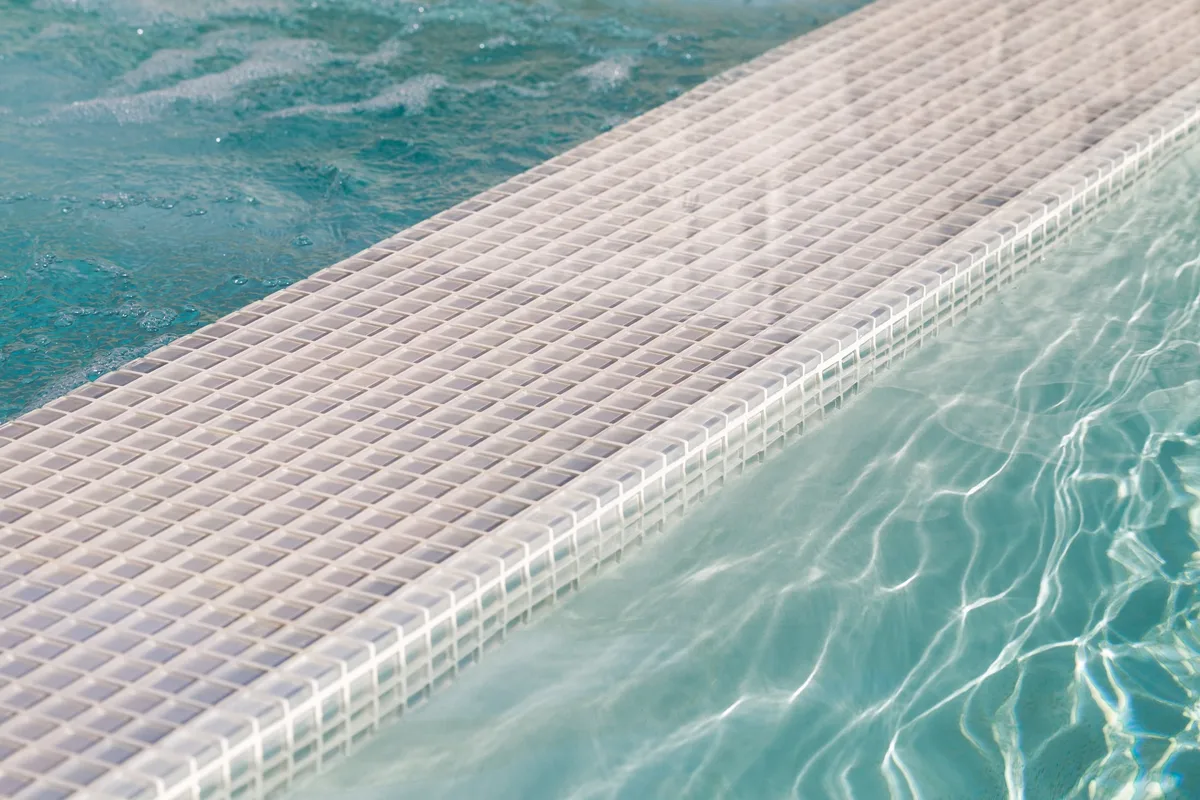
For all waterline and submerged tile work, Richard Lusk Landscape and Design uses the LATICRETE pool tile system: LATICRETE 3701 Fortified Mortar to build up and true the surface, LATICRETE HYDRO BAN waterproofing membrane, and LATICRETE 254 Platinum thin-set mortar to bond the tile. Using one manufacturer's tested, compatible system gives submerged tile the best chance of a strong, long-lasting bond in a continuously wet, chemically treated environment.
What is LATICRETE HYDRO BAN?
LATICRETE HYDRO BAN is a thin, load-bearing waterproofing membrane applied beneath tile. In pools, it creates a continuous waterproof layer behind waterline and submerged tile, protecting the mortar bed and pool shell from water and the bond from failure. We apply HYDRO BAN at the manufacturer's required thickness before setting tile with LATICRETE 254 Platinum.
What is LATICRETE 3701 Fortified Mortar?
LATICRETE 3701 Fortified Mortar is a polymer-fortified blend of portland cement and graded aggregates that needs only water to produce a high-strength mortar. In our pool tile work, we use it to build up and true the pool's waterline and tiled surfaces so the tile sits flat, straight and properly aligned. It is rated "Extra Heavy" under the TCNA service rating (ASTM C627).
What is LATICRETE 254 Platinum?
LATICRETE 254 Platinum is a premium, polymer-fortified thin-set mortar used to bond tile and stone. It is part of LATICRETE's pool installation system, and we use it to set all waterline and submerged tile over HYDRO BAN and a 3701 Fortified Mortar build-up. Its high bond strength is especially important in pools, where tile is constantly exposed to water, temperature changes and pool chemicals.
How is waterline and submerged tile installed in your pools?
Our sequence follows the LATICRETE system. First, LATICRETE 3701 Fortified Mortar builds up and trues the surface. Next, LATICRETE HYDRO BAN waterproofing membrane is applied over it. Then the tile is set with LATICRETE 254 Platinum thin-set mortar and grouted. Each layer is allowed to cure according to LATICRETE's published requirements before the next step and before the pool is filled.
Why use a complete tile system from one manufacturer?
Using a coordinated manufacturer system helps us verify material compatibility, preparation, curing and the installation details as a whole. Warranty coverage still depends on the specific products, application and written terms; it is not automatic merely because the containers carry one brand. For pool tile, we use the specified LATICRETE system and confirm the requirements for the actual tile, substrate and water exposure.
References: LATICRETE swimming pool design manual ↗
Why does pool tile fall off or crack?
Tile can fail because of movement, inadequate preparation or mortar coverage, incompatible materials, poor detailing, water conditions or insufficient curing. We investigate the cause before replacing it. Our approach includes a suitable substrate, the specified LATICRETE waterproofing and bonding system, movement joints and the required curing and startup sequence. Waterproofing alone cannot correct an unstable shell or guarantee against every future failure.
References: LATICRETE swimming pool design manual ↗
Why does waterline tile need waterproofing?
The waterline is the hardest-working tile in a pool: it is constantly wet, goes through wet and dry cycles as the water level changes, and is exposed to sun, pool chemicals and calcium buildup. Water that gets behind the tile can weaken the bond and leach minerals that cause white efflorescence. A waterproofing membrane such as LATICRETE HYDRO BAN behind the tile protects the bond and the pool shell.
Do you use the LATICRETE system for spas, raised walls and water features?
Yes. We use the LATICRETE system of 3701 Fortified Mortar, HYDRO BAN and 254 Platinum for all waterline and submerged tile work, which includes tiled spas, spillways, raised walls that are wet by water features, and other tile in contact with pool or spa water. Consistent methods across every wet tile surface give the whole project the same level of protection.
How long after tiling can the pool be filled?
The pool can be filled only after the mortar, membrane, thin-set and grout have cured as required by the manufacturer. LATICRETE publishes specific cure times for submerged installations, which depend on the products used and on temperature and humidity, and grout type in particular affects how long the tile must cure before the pool is filled. We follow those requirements, because filling a pool too soon can compromise the tile bond.
Do you use the LATICRETE system when remodeling an older pool's tile?
Yes. When we replace waterline or submerged tile in a pool remodel, we remove the old tile, prepare the surface, rebuild and true it with LATICRETE 3701 Fortified Mortar as needed, waterproof it with HYDRO BAN and set the new tile with 254 Platinum. This gives a remodeled pool the same tile installation standard as a new one.
Every property is different. The best way to get answers for yours is a complimentary site visit, followed by a complimentary detailed scope of work and budget.
Request a Complimentary Site Visit →