The homeowner guide
Outdoor Kitchens, Fire Features, Shade and Lighting
Outdoor kitchens, fire features, shade structures and lighting planned for your property, climate and local requirements.
How do we plan an outdoor kitchen that works with the rest of the yard?
Start with how you cook and entertain, and how food, people and seating will move between the house and outdoor areas. We plan prep space, storage, the grill and other appliances, and seating before fixing the island's size, and we coordinate gas, electrical, water and drainage. A beautiful island can still be inconvenient if it blocks circulation or isolates the cook, so we design the outdoor kitchen as part of the whole backyard.
When should barbecue appliances be selected?
Select the appliances early, during design, because each model has specific cutout dimensions, ventilation requirements, clearances and utility needs that shape the island. A generic opening can cause problems when the final appliance arrives. We confirm who purchases the appliances and when they must be on site, and we build the island to the actual specifications of your selected grill, side burners, refrigerator and other equipment.
Can an outdoor kitchen go beneath a patio cover?
Often, yes, but it requires careful design. The grill's manufacturer requirements, ventilation, clearances to combustible materials, the cover's construction and building and fire codes must all be considered. Some grills require a vent hood under a solid roof. Not every barbecue is suitable under every cover. We design the kitchen and cover together and confirm the arrangement with the appropriate approvals before building.
What should an outdoor kitchen include?
A well-designed outdoor kitchen typically includes a quality grill, generous counter space on both sides, storage, and a sink with hot and cold water if possible. Popular additions include side burners, a refrigerator, an ice maker, a pizza oven, a griddle, a beverage center, bar seating and good lighting. We plan the layout around your cooking style, so the features you use most are in the most convenient places.
What countertop materials work best outdoors?
Outdoor countertops need to withstand sun, heat, rain and temperature changes. Popular choices include granite, quartzite, porcelain slabs, poured concrete and some natural stones. Some quartz products are not rated for outdoor UV exposure, so they can discolor. Lighter colors stay cooler in the sun. We recommend materials that look good and perform outdoors over time.
How should we choose between a fire pit and an outdoor fireplace?
A fire pit creates an open, social, all-around seating area; an outdoor fireplace creates a focal point, provides more directional warmth and can block wind or views. They also differ in size, cost and relationship to nearby structures. Gas supply, manufacturer clearances and local fire restrictions matter. We consider the whole outdoor room, including seating, circulation and planting, before you decide based on appearance alone.
Gas or wood-burning fire feature: which is better?
The permitted choice depends on your address, appliance and site. Gas features can offer convenient operation and less smoke than wood, but they still need the required approvals, clearances and safe installation. Wood-burning features can face additional air-quality, fire and community restrictions. We check the responsible agencies and manufacturer’s requirements for the property before specifying either type.
Can wood be used for a patio cover or outdoor structure?
Wood can be a beautiful choice where it is permitted and appropriate, but material selection must account for local building codes, sun and moisture exposure, maintenance and any fire-hazard zone restrictions. Alternatives include aluminum, steel and other non-combustible or low-maintenance materials. We review the structure's appearance, durability and relationship to the house and confirm the construction before ordering materials.
What is the difference between an open pergola and a solid patio cover?
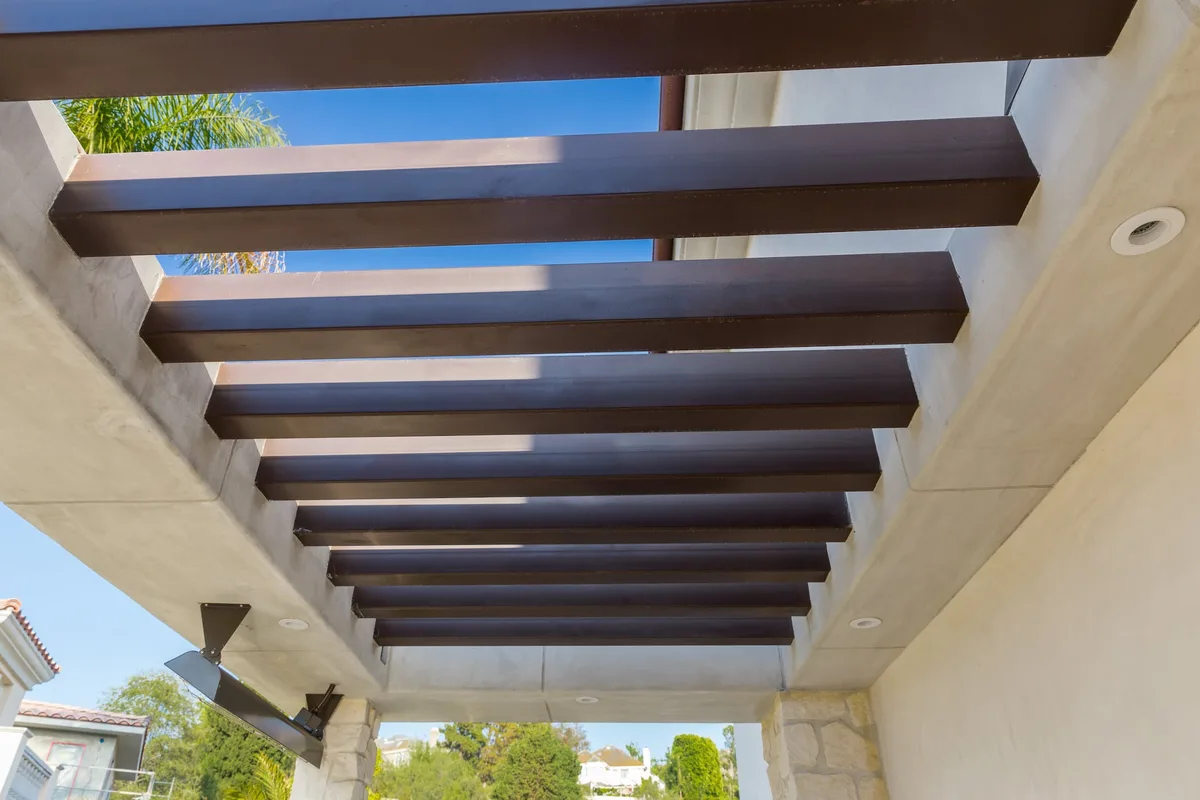
An open pergola has spaced beams or slats that provide partial shade and a sense of enclosure while letting light and air through. A solid patio cover provides full shade and rain protection, but it can darken adjacent rooms and requires roof drainage. Their structural and permit requirements can also differ. Louvered roofs offer adjustable shade between the two. We compare complete designs for your intended use.
What is a louvered patio cover?
A louvered patio cover is a structure, usually aluminum, with adjustable roof louvers that can be opened for sun and airflow or closed for shade and rain protection, often with motorized controls. It gives you the flexibility of a pergola and the protection of a solid roof. Louvered systems can integrate lighting, heaters and fans. They typically require a permit and proper engineering for the structure and footings.
Do you build patio covers, pergolas and decks?
Yes. Exterior carpentry and structures are part of our design-build services, including patio covers, pergolas, shade structures and decks, along with metalwork such as gates and railings. We design each structure to complement your home's architecture, coordinate engineering and permits, and integrate lighting, fans and heaters where desired.
What should a landscape lighting plan prioritize?
Start with safety and arrival: the front entry, driveway, paths and steps. Then light the outdoor areas you use after dark, such as dining, seating and the pool, and finally accent selected trees, planting and architectural features. The goal is atmosphere and usability without glare or lighting every surface. We coordinate fixture placement and wiring before paving and planting are complete so everything is in the right place.
Does low-voltage lighting eliminate electrical safety requirements?
No. Low-voltage landscape lighting still requires proper transformers, wire, connections and installation, and special electrical code requirements apply near pools and spas. A low-voltage system does not permit arbitrary fixture placement or homeowner wiring around water. We coordinate the lighting system with the broader electrical plan and install it according to code and manufacturer instructions.
What type of landscape lighting do you install?
We install low-voltage LED landscape lighting systems with quality fixtures for path lighting, uplighting trees, wall washing, step lights, hardscape lights and underwater accents. LED fixtures are energy-efficient and long-lasting, and modern systems can be controlled by timers, astronomical clocks or smartphone apps with zones and dimming. We design the lighting as part of your complete landscape.
Can outdoor heaters and fans be added to a patio cover?
Yes. Electric infrared heaters, outdoor-rated ceiling fans, lighting and speakers can be integrated into patio covers, pergolas and louvered roofs when the structure is planned for them. Each requires appropriate electrical circuits and mounting, and heaters require clearances specified by the manufacturer. Planning these elements during design makes installation cleaner and avoids exposed wiring.
Can you install an outdoor TV or sound system?
We can plan for outdoor entertainment by including conduit, power, mounting locations and protected spaces for outdoor TVs and speakers within your outdoor kitchen, patio cover or walls. Specialty audio-visual equipment is often installed by an AV contractor, and our design ensures the infrastructure is in place. Planning early avoids exposed wiring and visible equipment.
Can you build a pizza oven?
Yes, where the site and approvals allow it. We can integrate an appropriate gas or wood-fired pizza oven into an outdoor kitchen or masonry feature. The selected unit determines structural support, clearances, venting and utility needs. Fuel choice must also comply with local fire, air-quality and community rules; a wood-burning oven is not automatically allowed at every property.
How do you design an outdoor living room?
We plan a defined space for seating, shade, lighting and a useful connection to the house and outdoor kitchen. A view, planting or an approved fire feature can provide a focal point. Coastal wind, inland sun and desert heat affect when the space is comfortable, so we tailor cover, orientation and materials to the property rather than promise year-round comfort from one standard layout.
Do you build fire bowls, fire tables and fire-and-water features?
Yes. We install gas fire bowls on pool walls, fire-and-water bowls that combine flame and spilling water, built-in fire tables and linear fire features. These features require gas lines, ignition systems and sometimes electrical controls, and they must meet manufacturer clearances and local fire rules. They create a dramatic focal point, especially at night.
Can we add a bar or bar seating outdoors?
Yes. A raised bar counter along the outdoor kitchen lets guests sit with the cook, and a swim-up bar or pool-adjacent bar creates a resort experience. Bar designs should include comfortable counter heights, knee space, shade and lighting. We design bar areas as part of the outdoor kitchen and pool layout.
Every property is different. The best way to get answers for yours is a complimentary site visit, followed by a complimentary detailed scope of work and budget.
Request a Complimentary Site Visit →