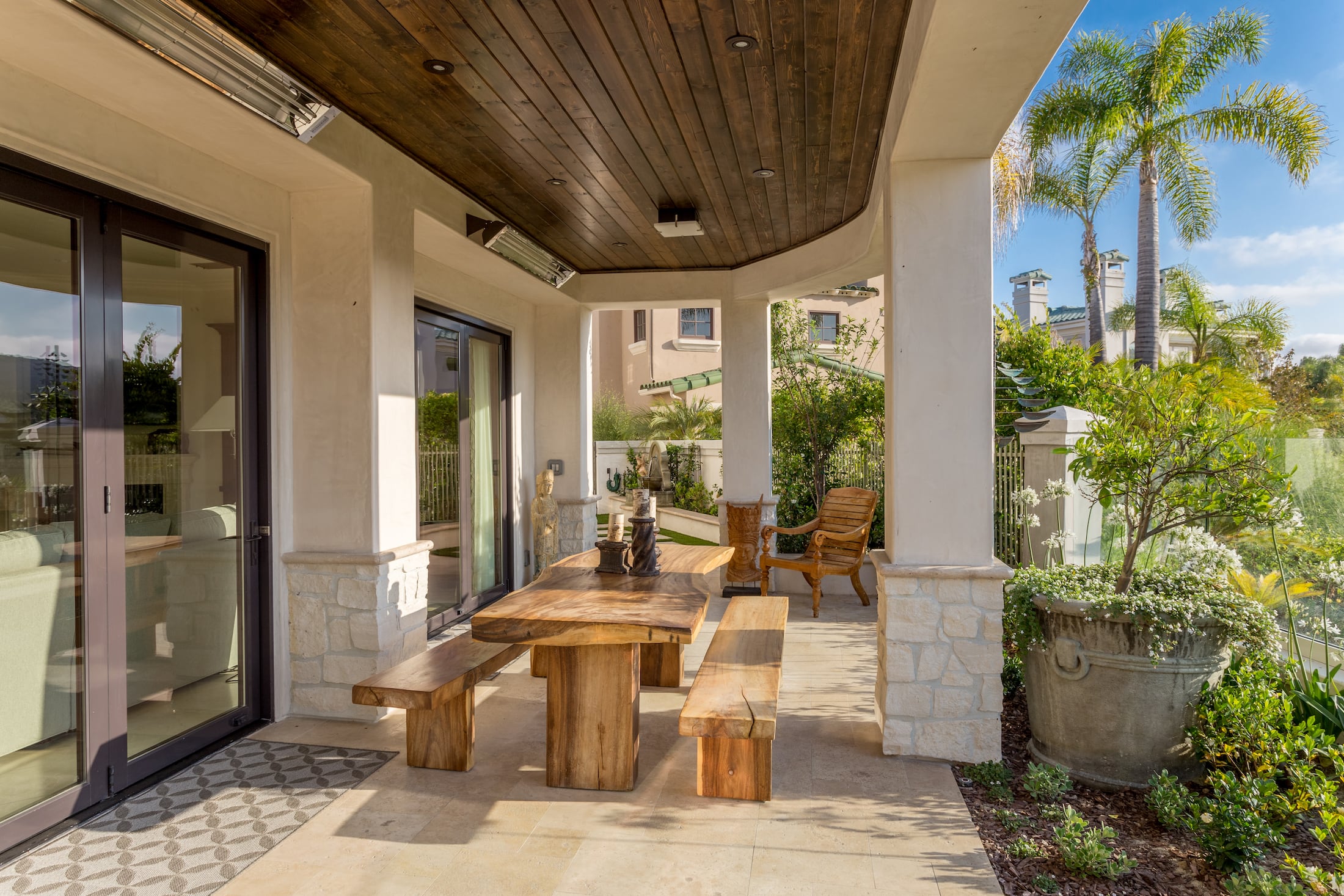
Orange County, California
Custom Pool & Outdoor Living in Orange County
Pale stone. Green glass. Water you can see and hear.
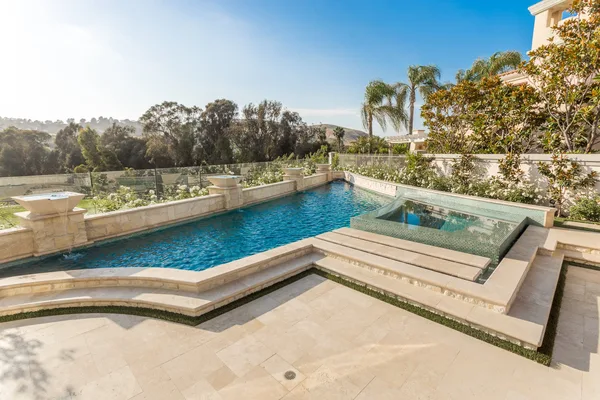
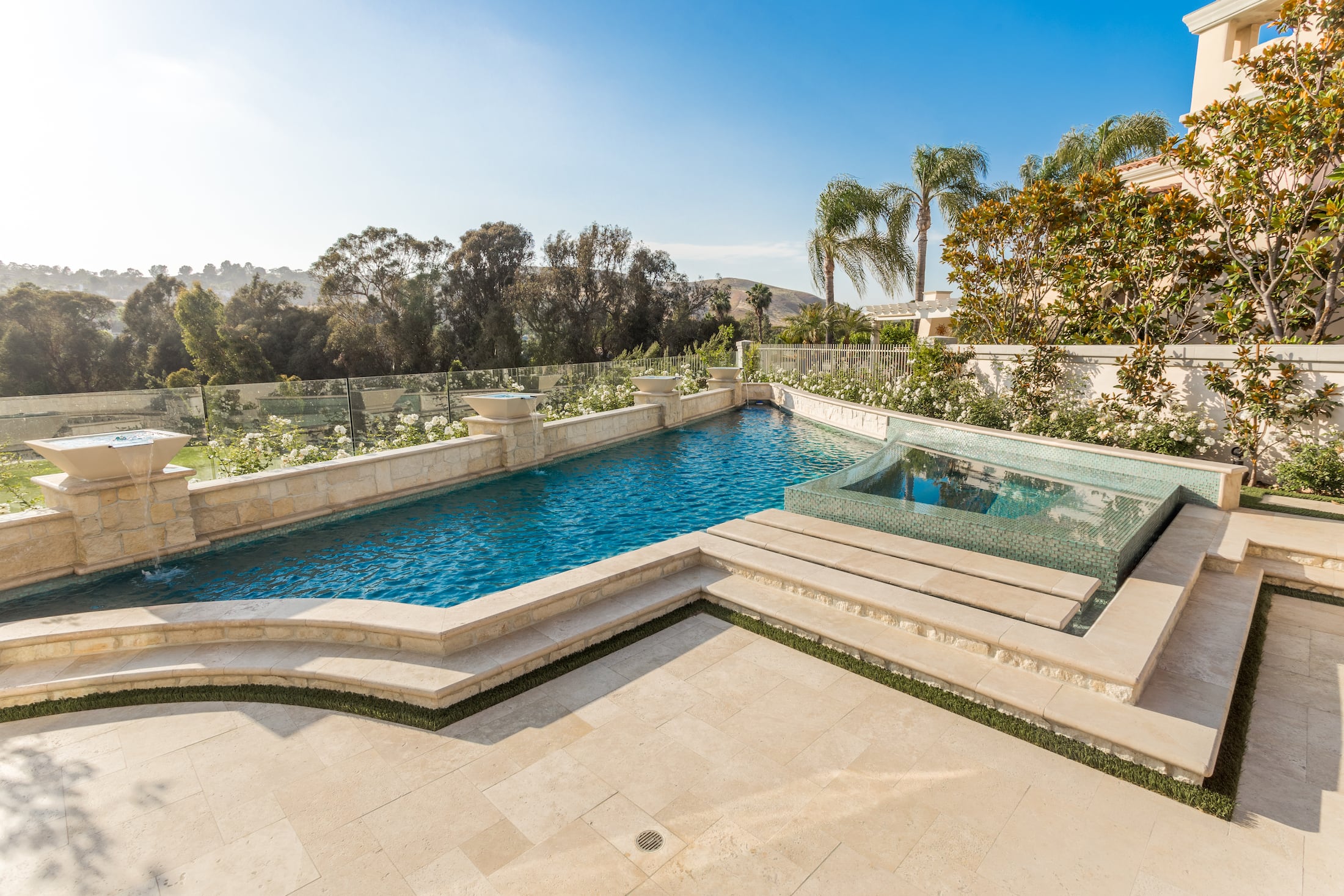
This Orange County project pairs warm, pale stone with iridescent green glass tile. A raised spa finished in green mosaic sits at one end of the pool, wrapped in broad stone steps. Along a stone-faced wall, square bowls spill water into the pool. A covered dining porch with a curved wood ceiling looks over all of it. An outdoor kitchen, a pergola, chaise terraces, citrus and a palm garden complete the yard.
This case study explains how a pool with several water features is built, and how the look and the sound of moving water are tuned on site.
At a glance
- The setting: A hillside home in Orange County with an open view beyond a glass fence.
- The scope: Custom pool, raised glass-tiled spa with spillway, stone steps and terraces, water bowls on a stone-faced wall, covered dining porch, outdoor kitchen, pergola, planting and lighting.
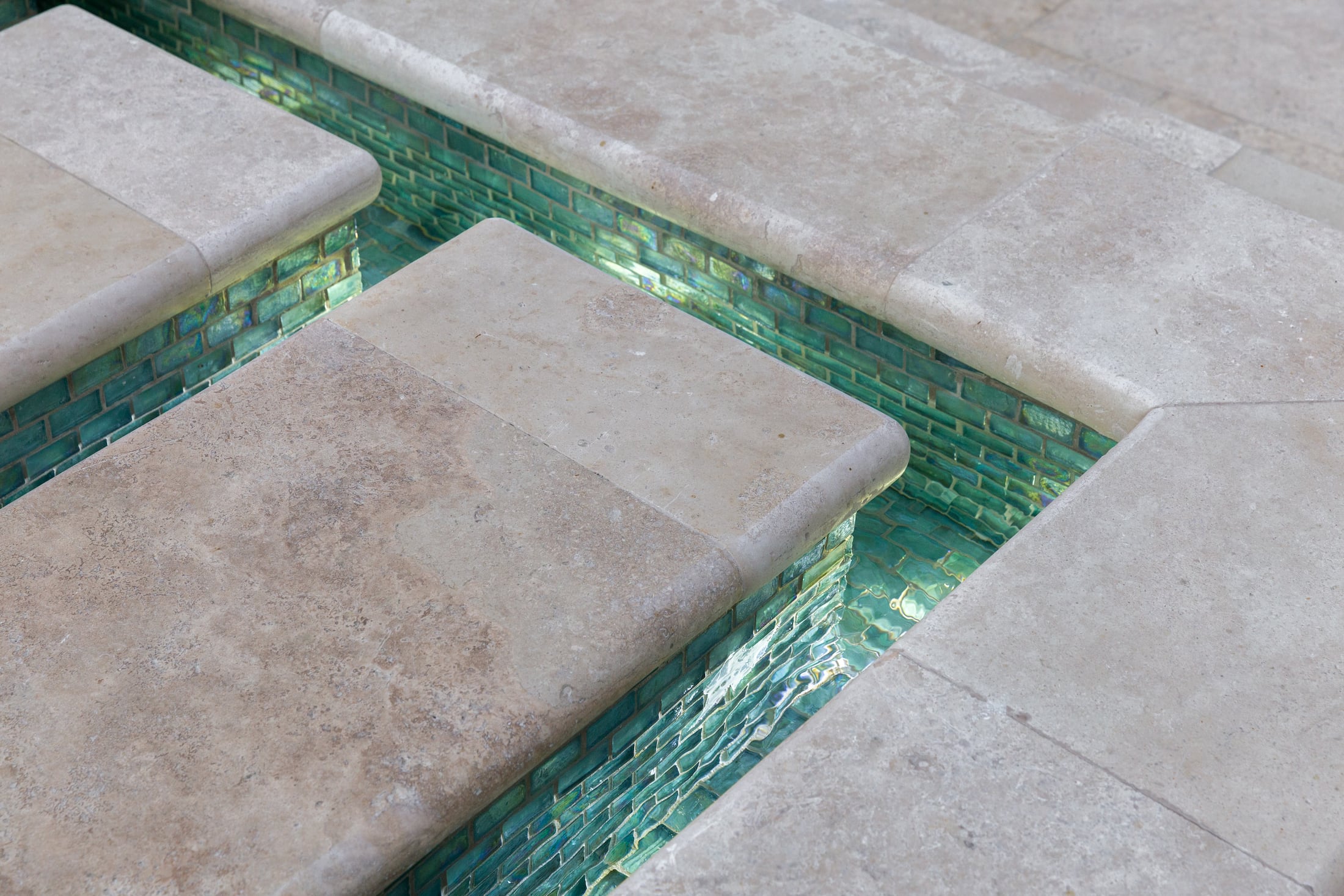
- The signature detail: A narrow channel of green glass mosaic between slabs of pale stone, where the spa spills into the pool.
- Location: Orange County, California.
Three kinds of moving water, each with its own job.
Water features are often added to a pool as decoration. They work better when each one has a purpose. The photographs show three here.
At the spa, water rises to the rim and spills through a narrow tiled channel into the pool. The fall is short and the sound is soft. This is the feature closest to the dining porch.
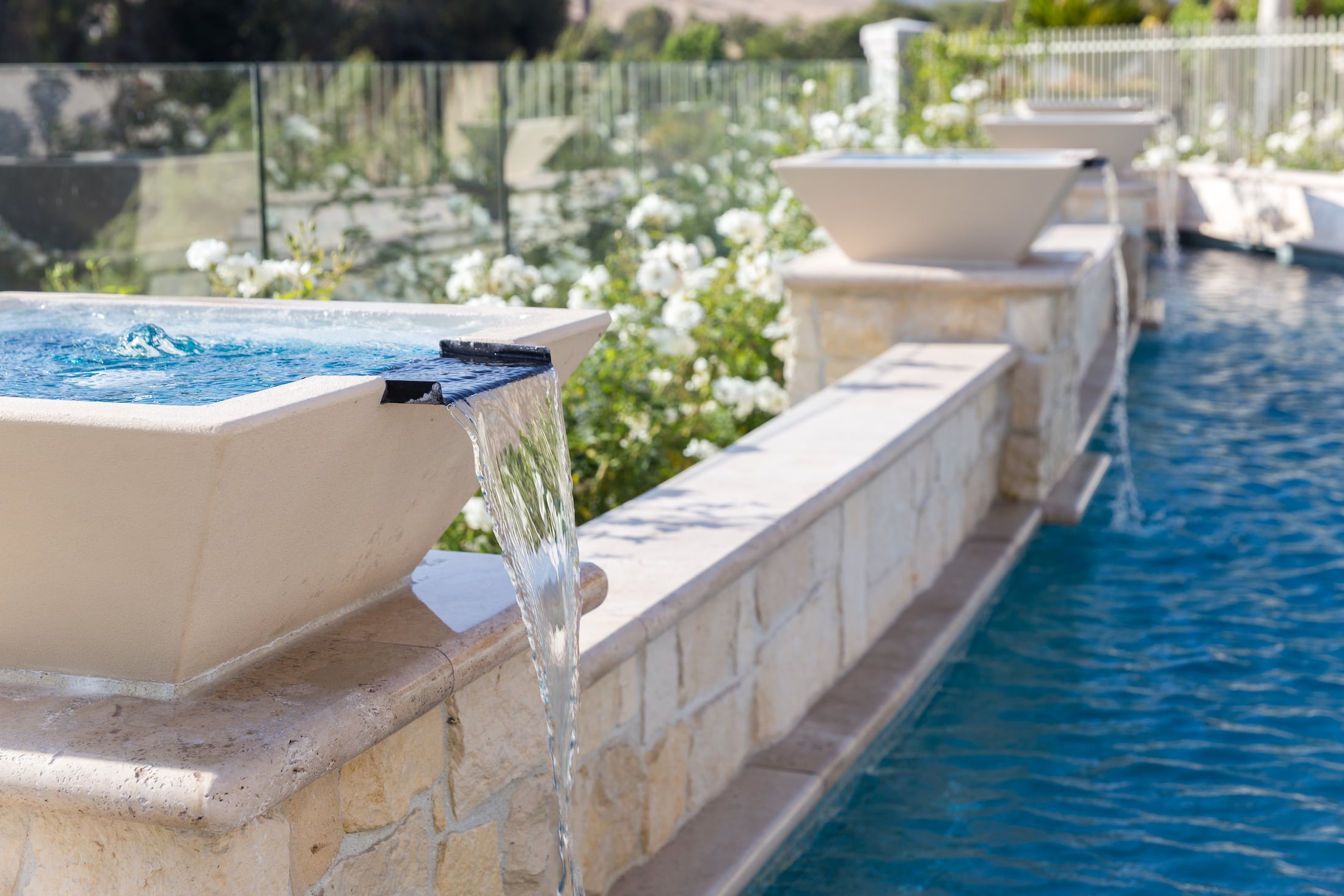
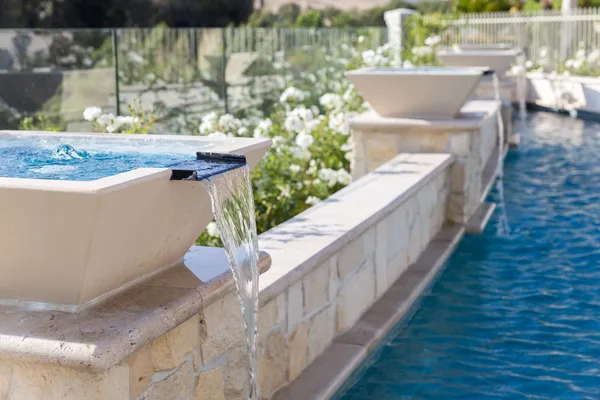
Along the pool wall, square bowls stand on stone pedestals. Each sends a single clear sheet of water from a spout into the pool. The fall is longer, so the sound is brighter. These are farther from the table and nearer the chaise terrace.
In the planting, water bubbles up through river pebbles. It makes almost no sound. It is there to catch the light.
Because each feature is separate, the yard can be quiet for dinner or lively for an afternoon with a full pool. That only works if each one can be controlled on its own.
Why raise the spa?
- It makes a spillway possible. Water needs a drop to fall. Raising the spa creates one.
- It gives the spa a view. Sitting a little higher lifts the eye over the pool to the landscape beyond.
- It creates seating. The broad steps that wrap a raised spa are also benches for people who are not in the water.
- It marks the end of the pool. A raised element gives a rectangular pool a clear focal point.
The build, layer by layer.
01. Plan the water features with the plumbing
Each water feature is drawn with its own supply line, valve and, where the flow justifies it, its own pump. We decide at this stage which features run with the filtration system and which run on demand. Flow rates are estimated from the width of each spill edge, so pipes are sized correctly before they are buried.
02. Build the pool and the spa as one structure
The pool and raised spa are excavated, formed and tied in steel together. The dam wall between them carries water on both sides and is detailed by the structural engineer. The spa's benches, jets, lights and the notch for the spillway are all formed before concrete. The shell is placed in shotcrete and cured wet.
03. Build the feature wall
The wall behind the bowls is built on its own footing, with supply lines cast into it and brought up through each pedestal. The pedestals are set to a level line so the bowls sit at one height. The wall is waterproofed on the pool side before stone is applied.
04. Waterproof and float the spa
The spa interior and the spillway are waterproofed with LATICRETE HYDRO BAN and floated with LATICRETE 3701 fortified mortar. The float sets the final shape of the spillway: its width, its slope and, most important, the level of its lip. A spa that will be finished in glass tile is floated on every surface, since glass shows any unevenness behind it.
05. Set the green glass mosaic
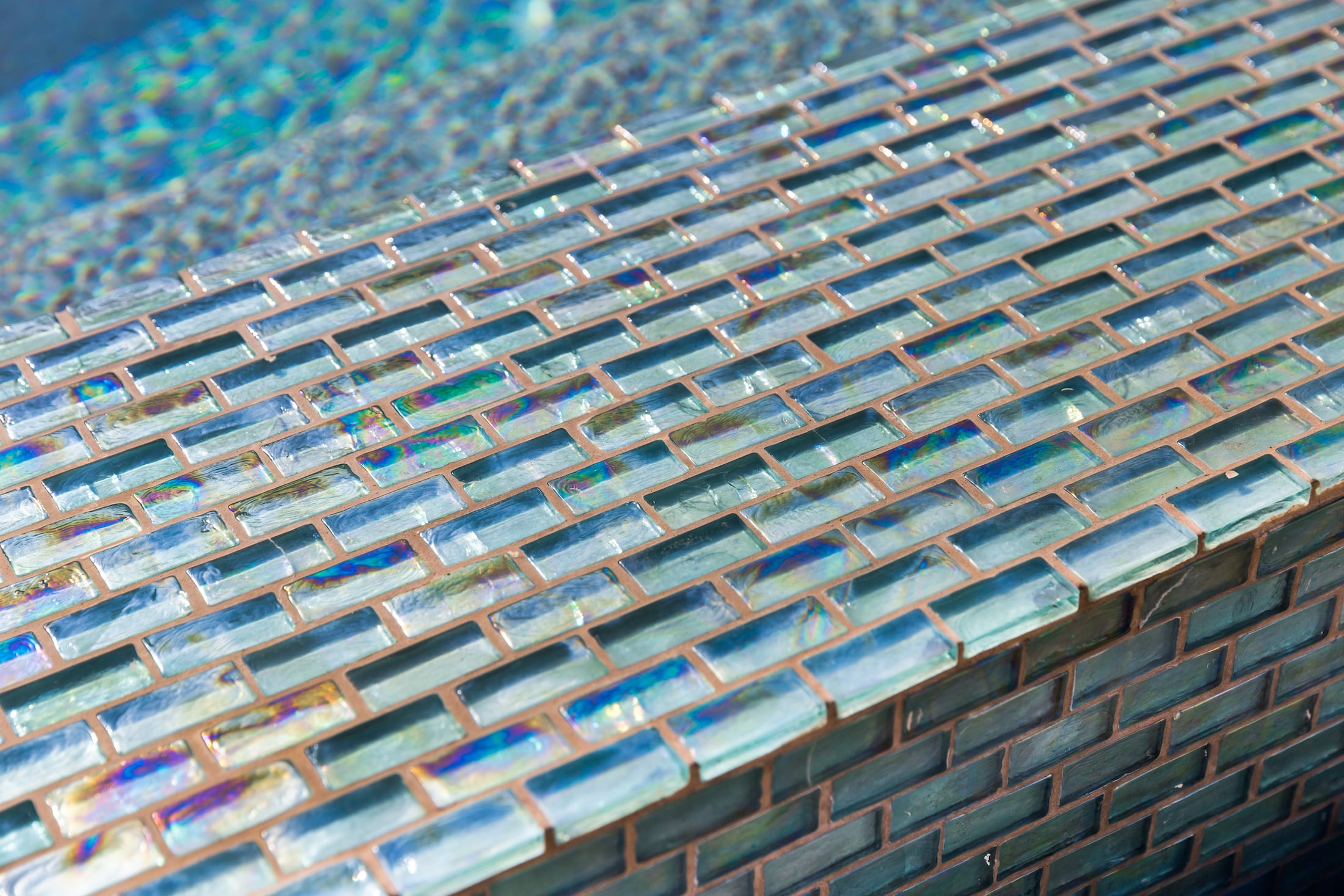
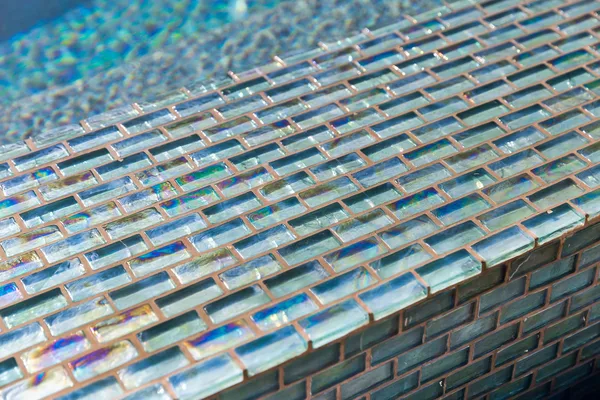
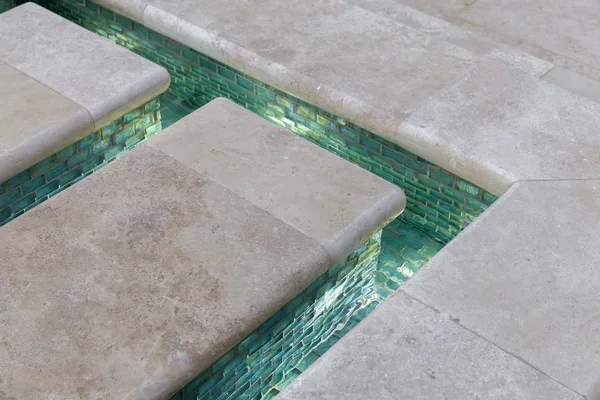
The glass tile is set in LATICRETE 254 Platinum with full coverage. The pieces on this spa are small rectangles laid in a staggered pattern, with a mix of green and blue tones. At the corners, the pattern has to turn without leaving slivers. The close-up photograph shows the tile wrapping an outside corner with the courses continuing around.
06. Set the stone
The coping, the spa steps and the terrace are pale natural stone with a soft, rounded edge. Stone is mortar-set over a concrete subbase, with RedGard anti-fracture membrane beneath it. At the spillway, two stone slabs are held apart at an exact width and the green tile runs between them. That joint is the detail people look at most, so the slabs are cut and placed to keep it parallel along its whole length.
07. Face the wall and set the bowls
The feature wall is faced in stone to match the terrace. The bowls are set on their pedestals, connected, and checked for level in both directions. A bowl that tilts slightly will send its water off the side of the spout and not off the front.
08. Tune the water
With the pool full, each feature is run and adjusted. At the spillway, we look for a continuous sheet with no dry corners. If one side runs dry at the flow the owner likes, the answer is to dress the lip, not to turn up the pump, since more flow means more noise. At the bowls, each valve is set so the sheets match. We then listen from the dining porch, where the sound will be heard most often, and mark the valve positions.
09. Finish the porch and the kitchen
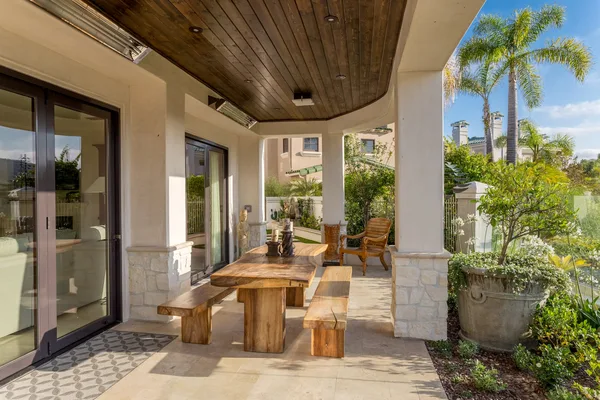
The covered porch has a curved wood ceiling with heaters set into it. Wood overhead is sealed for exterior exposure, and the heaters are installed with the clearances their manufacturer requires. The outdoor kitchen is built with stone counters on a stone-faced base, with gas, power and water to each appliance.
10. Plant, light and hand over
Planting includes palms, citrus, white flowering shrubs and succulents, on drip irrigation. The pool, the spa and the steps are lit, and low-voltage fixtures pick out the palms and the feature wall. After startup and final inspections, we show the owner how to set each water feature and how to care for the stone and the tile.
Where water features go wrong, and how we avoid it.
Too loud. A feature that sounds pleasant for five minutes can be tiring for an evening. The height of the fall and the volume of water set the sound. We keep falls short near seating areas and give every feature a valve.
Dry corners. Water follows the lowest path across a lip. If the lip is not level, part of it stays dry and scale builds up along the wet edge. We level and dress spill edges in the float and check them with water running.
Everything on one pump. When features share a line with the pool returns, changing one changes the others. We separate them.
Splash-out. A long fall into shallow water splashes onto the deck and wastes water. We match the fall height to the depth below it.
Scale on dark or glass tile. Evaporation leaves minerals where water runs thin. Balanced water chemistry and an occasional brushing keep spill edges clean. We include that in the handover.
Stone and glass, seen from the table.
From the dining porch, the finished yard is a long view across pale stone to green glass and blue water. The spa is the focal point. The bowls animate the far wall. At dusk the steps and the spa are lit, and the green tile glows against the stone.
More photographs, including the kitchen, the pergola and the planting, are in the project gallery.
Caring for stone, glass tile and water features.
This yard combines three materials that each ask for something a little different. The pale natural stone should be sealed with a penetrating sealer and resealed on the schedule the supplier recommends. Stone of this kind is sensitive to acids, so clean it with neutral cleaners only, and rinse away pool water that dries on the coping and steps. Around the outdoor kitchen and the dining porch, wipe up oil, wine and citrus promptly. The citrus trees are lovely, and dropped fruit will etch stone if it is left to sit.
The green glass mosaic on the spa should be brushed with a soft brush and wiped at the waterline. A spa runs hotter than a pool, and hot water evaporates faster and leaves scale sooner, so the spa's chemistry needs checking more often. Keep the spillway lip clean. A thin line of scale on one side is enough to pull the water off the other.
The water bowls should be run regularly, so water does not stand in them, and their spouts cleaned so the sheet stays whole. If a bowl's sheet begins to split or dribble, the cause is nearly always debris or scale at the spout and not the pump.
The wood ceiling of the porch should be inspected yearly and refinished when it begins to dry out. The heaters set into it should be serviced as their manufacturer directs. Glass fence panels can be cleaned with ordinary glass cleaner, and their hardware should be checked for tightness.
We do not provide weekly pool service. We are glad to recommend pool service and landscape maintenance companies, and at handover we mark the valve settings the owner prefers for each water feature.
What would you change about your pool?
- Raising or retiling an existing spa
- Adding a spillway between spa and pool
- Adding water bowls, sheer descents or a feature wall
- Separating water features onto their own controls
- Building a covered dining porch beside the pool
Questions homeowners ask about pool water features
How do you control the sound of a waterfall or spillway?
Sound comes from the height of the fall and the amount of water. We keep falls short near dining and seating areas, level the spill edge so it works at a low flow, and put each feature on its own valve so the owner can adjust it.
Can glass tile be used on a spa?
Yes. Glass mosaic is an excellent spa finish. It needs a waterproofed, carefully floated surface and full thin-set coverage. We use the LATICRETE system on waterline and submerged tile.
Can water features be added to an existing pool?
Often they can. Bowls and feature walls can be added along a pool edge with new plumbing, and a spa can sometimes be raised or given a spillway as part of a remodel. A site visit tells us what the existing structure and equipment will allow.
Do water features waste water?
A well-designed feature recirculates pool water. The losses are from evaporation and splash, both of which increase with fall height and wind. We size the fall to the depth below it and give the owner a way to turn features down or off.
Love your home. Rethink your yard.
Every project begins with a complimentary site visit. From that visit we prepare a complimentary, detailed scope of work and budget, so you know what the project includes before any design work starts.
Request a Complimentary Site Visit. Call 800-808-7510 or email info@richardlusk.com.
Richard Lusk Landscape and Design has been building pools and landscapes since 1976, with more than 3,000 projects completed. California contractor license 950714, C-27 Landscaping and C-53 Swimming Pool. Bonded and insured. Serving Orange County, selected Los Angeles communities and La Quinta.
Materials and construction references
- LATICRETE HYDRO BAN waterproofing
- LATICRETE 3701 Fortified Mortar Bed
- LATICRETE 254 Platinum thin-set
- RedGard waterproofing and crack prevention membrane, product data
- American Shotcrete Association, concrete interfaces and surface preparation
- American Shotcrete Association, curing swimming pool shotcrete